
 Facebook
 X
X LinkedIn
 Forward
November 20, 2025: Fall New England Journal of Medicine Clinicopathological Conference - A 24-Year-Old Man with Depression, Anhedonia, and Fatigue
A 24-Year-Old Man with Depression, Anhedonia, and Fatigue
Description:
This Case Records of the MGH for the New England Journal of Medicine is a clinicopathological conference about an adult who presented with excessive daytime fatigue and worsening mood symptoms. A differential diagnosis will be presented, and the diagnostic test will reveal the final diagnosis.
Target Audience
This program is intended for Psychiatrists, Psychologists, General and Family Practice Physicians, Psychiatric Nurses, Physician Assistants, Nurse Practitioners, and Social Workers.
Learning Objectives
Upon completion of the activity, participants will be able to:
- To construct a differential diagnosis of a young patient with mood and substance use disorders presenting with excessive fatigue, somnolence, and anhedonia.
- To discuss how to use deductive reasoning and clinicopathologic confirmation.
- To describe the diagnostic tests that reveal the final diagnosis of the patient.
- To discuss the treatment and management considerations of the final diagnosis.
SPEAKER(S)
Clinical Impression and Follow-up: Aaron Quiggle, MD
MGH Department of Psychiatry
Differential Diagnosis: Masoud Kamali, MD
MGH Department of Psychiatry
Diagnostic Testing and Management: Amit Chopra, MBBS
MGH Department of Psychiatry
Course summary
- 1.00 AMA PRA Category 1 Credit™
This activity has been planned and implemented in accordance with the accreditation requirements and policies of the Accreditation Council for Continuing Medical Education (ACCME) through the joint providership of IHP and Massachusetts General Hospital. IHP is accredited by the ACCME to provide continuing medical education for physicians.
IHP designates this Enduring activity for a maximum of 1.00 AMA PRA Category 1 Credit™. Physicians should only claim credit commensurate with the extent of their participation in the activity.
- 1.00 Nursing Contact Hours
Massachusetts General Laws, Chapter 13, sections 13, 14, 14A, 15 and 15D and Chapter 112, sections 74 through 81C authorize the Board of Registration in Nursing to regulate nursing practice and education.
This program meets the requirements of the Massachusetts Board of Registration in Nursing (244 CMR 5.00) for 1.00 contact hours of nursing continuing education credit. Advance practice nurses, please note: Educational activities which meet the requirements of the ACCME (such as this activity) count towards 50% of the nursing requirement for ANCC accreditation.
- 1.00 Social Workers
As a Jointly Accredited Organization, the MGH Institute of Health Professions is approved to offer social work continuing education by the Association of Social Work Boards (ASWB) Approved Continuing Education (ACE) program. Organizations, not individual courses, are approved under this program. State and provincial regulatory boards have the final authority to determine whether an individual course may be accepted for continuing education credit. MGH Institute of Health Professions maintains responsibility for this course. Social workers completing this course receive 1.00 clock hours for continuing education credits.
- 1.00 Participation
This course allows other providers to claim a Participation Certificate upon successful completion of this course.
Participation Certificates will specify the title, location, type of activity, date of activity, and number of AMA PRA Category 1 Credit™ associated with the activity. Providers should check with their regulatory agencies to determine ways in which AMA PRA Category 1 Credit™ may or may not fulfill continuing education requirements. Providers should also consider saving copies of brochures, agenda, and other supporting documents.
- 1.00 Psychologists CE Credit
Continuing Education (CE) credits for psychologists are provided through the co-sponsorship of the American Psychological Association (APA) Office of Continuing Education in Psychology (CEP). The APA CEP Office maintains responsibility for the content of the programs. MGH Institute of Health Professions designates this activity for 1.00 CE credit.

Aaron Quiggle, PhD
Dr. Aaron R. Quiggle is a psychiatrist in Boston, Massachusetts, and is affiliated with multiple hospitals in the area, including MassGeneral Hospital for Children and Massachusetts General Hospital. He received his medical degree from the University of California (San Francisco) School of Medicine and has been in practice for 6-10 years.
Aaron R. Quiggle is a Harvard, Columbia/Cornell, and UC San Francisco-trained physician, and triple-board certified in adult, child/adolescent, and addiction psychiatry. In addition to treating mental health disorders across the lifespan (depression, anxiety, trauma, ADHD, bipolar disorder, for instance), he has particular expertise and experience in treating people of any age with co-occurring struggles with substance use.
In addition to his private practice, he serves as the medical director of the Addiction Recovery Management Service at Massachusetts General Hospital and is on faculty at Harvard Medical School, where he teaches and supervises medical residents and fellows.
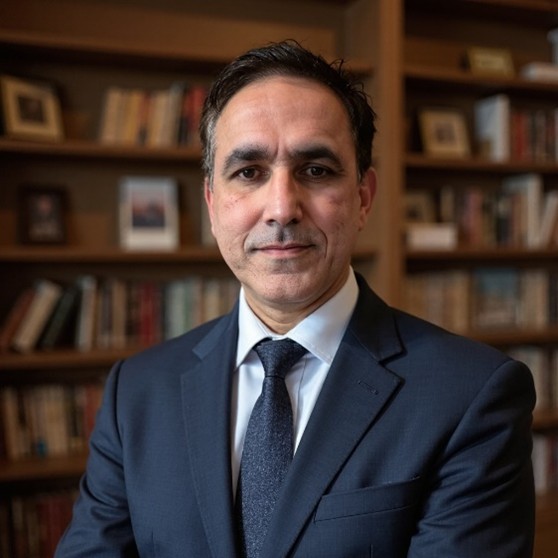
Amit Chopra, MBBS
Dr. Amit Chopra is a Psychiatrist and Sleep Specialist at Massachusetts General Hospital (MGH) and an Assistant Professor at Harvard Medical School. He completed his medical training at Sawai Man Singh College, Jaipur, India, followed by research and clinical training in the UK at King’s College London and University College London. Dr. Chopra completed his Adult Psychiatry Residency, Sleep Medicine Fellowship, and Deep Brain Stimulation Fellowship at Mayo Clinic, Rochester, Minnesota.
Dr. Chopra has multiple areas of interest, including mood disorders, sleep disorders, and brain stimulation interventions for treating psychiatric disorders. He served as a medical director for the Center for Treatment-Resistant Depression and the Center for Psychiatric Neuromodulation and as president of the Pittsburgh Psychiatric Society before joining MGH.
Dr. Chopra has established the Treatment-Resistant Depression Initiative (TRDi) at MGH. This innovative clinical care approach incorporates the principles of early intervention and a one-team approach, providing expedited access to specialized care for TRD patients in the Boston area.
Dr. Chopra has received prestigious research and clinical awards for his work, including Distinguished Fellow of the American Psychiatric Association. Dr. Chopra is passionate about the interface of Psychiatry and Sleep Medicine and co-authored a book, ‘Management of Sleep Disorders in Psychiatry.

Masoud Kamali, MD
Dr. Kamali is a staff psychiatrist at the Dauten Family Center for Bipolar Treatment Innovation at Massachusetts General Hospital (MGH) and an Assistant Professor of Psychiatry at Harvard Medical School. His clinical practice focuses on working with individuals diagnosed with bipolar disorder and providing consultations to fellow clinicians regarding the diagnosis and treatment of this condition. His research interests include better understanding the longitudinal course and outcomes of bipolar disorder and recognizing and reducing the risk factors for suicide in this population.
Dr. Kamali has authored multiple journal articles, research manuscripts, and book chapters related to mood disorders and suicide. He has also been an investigator on several clinical research projects, including treatment trials and investigational studies of bipolar disorder and suicidal behavior. Additionally, he plays an integral role in the clinical training and supervision of psychiatry residents and psychology interns at MGH.
Dr. Kamali graduated from Tehran University of Medical Sciences in Iran and completed his residency at St. Luke’s-Roosevelt Hospital in NYC. He joined MGH in 2015 from the University of Michigan, where he completed a research fellowship and was on the faculty, doing research on bipolar disorder, impulsivity, and suicidal behavior.
Available Credit
- 1.00 AMA PRA Category 1 Credit™
This activity has been planned and implemented in accordance with the accreditation requirements and policies of the Accreditation Council for Continuing Medical Education (ACCME) through the joint providership of IHP and Massachusetts General Hospital. IHP is accredited by the ACCME to provide continuing medical education for physicians.
IHP designates this Enduring activity for a maximum of 1.00 AMA PRA Category 1 Credit™. Physicians should only claim credit commensurate with the extent of their participation in the activity.
- 1.00 Nursing Contact Hours
Massachusetts General Laws, Chapter 13, sections 13, 14, 14A, 15 and 15D and Chapter 112, sections 74 through 81C authorize the Board of Registration in Nursing to regulate nursing practice and education.
This program meets the requirements of the Massachusetts Board of Registration in Nursing (244 CMR 5.00) for 1.00 contact hours of nursing continuing education credit. Advance practice nurses, please note: Educational activities which meet the requirements of the ACCME (such as this activity) count towards 50% of the nursing requirement for ANCC accreditation.
- 1.00 Social Workers
As a Jointly Accredited Organization, the MGH Institute of Health Professions is approved to offer social work continuing education by the Association of Social Work Boards (ASWB) Approved Continuing Education (ACE) program. Organizations, not individual courses, are approved under this program. State and provincial regulatory boards have the final authority to determine whether an individual course may be accepted for continuing education credit. MGH Institute of Health Professions maintains responsibility for this course. Social workers completing this course receive 1.00 clock hours for continuing education credits.
- 1.00 Participation
This course allows other providers to claim a Participation Certificate upon successful completion of this course.
Participation Certificates will specify the title, location, type of activity, date of activity, and number of AMA PRA Category 1 Credit™ associated with the activity. Providers should check with their regulatory agencies to determine ways in which AMA PRA Category 1 Credit™ may or may not fulfill continuing education requirements. Providers should also consider saving copies of brochures, agenda, and other supporting documents.
- 1.00 Psychologists CE Credit
Continuing Education (CE) credits for psychologists are provided through the co-sponsorship of the American Psychological Association (APA) Office of Continuing Education in Psychology (CEP). The APA CEP Office maintains responsibility for the content of the programs. MGH Institute of Health Professions designates this activity for 1.00 CE credit.
Accreditation
 In support of improving patient care, MGH Institute of Health Professions is jointly accredited by the Accreditation Council for Continuing Medical Education (ACCME), the Accreditation Council for Pharmacy Education (ACPE), and the American Nurses Credentialing Center (ANCC) to provide continuing education for the healthcare team.
1.0 Physicians
MGH Institute of Health Professions designates this live activity for a maximum of 1.0 AMA PRA Category 1 Credits ™. Physicians should claim only credit commensurate with the extent of their participation in this activity.
1.0 Physician Associates/Assistants
AAPA Credit Designation Statement – Live
 MGH Institute of Health Professions has been authorized by the American Academy of PAs (AAPA) to award AAPA Category 1 CME credit for activities planned in accordance with AAPA CME Criteria. This activity is designated for 1.0 AAPA Category 1 CME credits. PAs should only claim credit commensurate with the extent of their participation.
AAPA Credit Designation Statement – Enduring Materials
MGH Institute of Health Professions has been authorized by the American Academy of PAs (AAPA) to award AAPA Category 1 CME credit for activities planned in accordance with AAPA CME Criteria. This activity is designated for 1.0 AAPA Category 1 CME credits. Approval is valid until {Expiration Date). PAs should only claim credit commensurate with the extent of their participation.
1.0 Nursing
MGH Institute of Health Professions designates this activity for 1.0 contact hours for nurses. The American Academy of Nurse Practitioners Certification Board (AANPCB) accepts credit from organizations accredited by the ACCME and ANCC.
1.0 Pharmacists
 This activity provides 1.0 contact hours of continuing education credit.
NOTE FOR PHARMACISTS: Upon closing of the electronic evaluation, IHP will upload the pharmacy-related continuing education information to the CPE Monitor within 60 days. Per ACPE rules, IHP does not have access nor the ability to upload credits requested after the evaluation closes. It is the responsibility of the pharmacist or pharmacy technician to provide the correct information [NABP ePID and DOB (in MMDD format)] in order to receive credit for participating in a CE activity.
1.0 Psychologists:
 Continuing Education (CE) credits for psychologists are provided through the co-sponsorship of the American Psychological Association (APA) Office of Continuing Education in Psychology (CEP). The APA CEP Office maintains responsibility for the content of the programs. MGH Institute of Health Professions designates this activity for 1.0 CE credit.
1.0 Social Workers
 As a Jointly Accredited Organization, MGH Institute of Health Professions is approved to offer social work continuing education by the Association of Social Work Boards (ASWB) Approved Continuing Education (ACE) program. Organizations, not individual courses, are approved under this program. State and provincial regulatory boards have the final authority to determine whether an individual course may be accepted for continuing education credit. MGH Institute of Health Professions maintains responsibility for this course. Social workers completing this course receive 1.0 clock hours for continuing education credits.
1.0 IPCE Credit
 This activity was planned by and for the healthcare team, and learners will receive 1.0 Interprofessional Continuing Education (IPCE) credit for learning and change.